
Here's a recap of events that occurred in India in the past 24 hours.
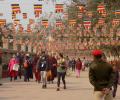
'We are happy China has failed to disrupt the Kalachakra Puja by its repressive measures in Tibet; many Tibetans have come to attend the Puja.'

Yasin Bhatkal, the arrested Indian Mujahideen founder who has been taken to New Delhi for questioning, has admitted to his role in almost all blasts barring the Bodh Gaya incident which took place last month.

Air India's new chief Ashwani Lohani is a man of many parts. Here are 10 interesting facts about him.

As disputed South China Sea witnesses increased Chinese influence, Vietnamese Prime Minister Nguyen Tan Dung on Monday pitched for India's "active support" to peacefully resolve all disputes and sought its greater linkages across the region.

The Dalai Lama headed Kalachakra Puja in Bodh Gaya has drawn devotees from 92 countries.

Prime Minister Narendra Modi on Tuesday held talks with his Nepalese counterpart Sushil Koirala on key strategic issues after which ten agreements, including a pact on $1 billion assistance to Nepal, were inked.

The probe into the multiple blasts in Bodh Gaya was handed over to the National Investigation Agency by the Centre following a request from the Bihar government.
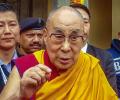
'The logical step is to challenge the very legitimacy of the Chinese claim over Tibet,' recommends Inspector General Gurdip Singh Uban (retd).
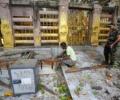
It might have taken several years, but the intelligence and security agencies in several states recently tracked down and arrested dreaded terrorists involved in creating havoc in the country. It began with the arrest of Zabbiuddin Ansari, an accused in the 2008 Mumbai terror attacks, then came the arrest of Indian Mujahideen co-founder Yasin Bhatkal followed by Lashkar-e-Tayiba bomb maker Abdul Karim Tunda, Zaveri Bazaar bomber Waqas Ahmed and now IM chief Tehsin Akthar. In a five-part series, Rediff.com's Vicky Nanjappa describes how each of these terrorists were painstakingly tracked by the Intelligence Bureau and arrested by the security agencies.
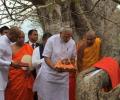
"Looking forward to a wonderful day," Prime Minister Narendra Modi tweets before he leaves Colombo. G Sudhakar Nair/PTI reports from Anuradhapura
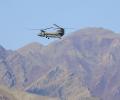
'Our strategy should be to 'hold the line' in the north on the Sino-Indian land frontier, but maintain and, if possible, enlarge India's current edge in the maritime south.'
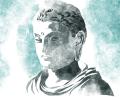
Count among The Light of Asia's many, many admirers over 132 years: Gandhi, Tagore, Vivekananda, Nehru and Ambedkar, Tolstoy and Kipling, Yeats and Eliot, Alfred Nobel, Dmitri Mendeleev and C V Raman. Jairam Ramesh reveals why he decided to write a book on Edwin Arnold, who wrote The Light of Asia.
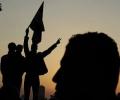
A disparate global network of violent fundamentalist Islamic groups threatens India's eastern flank as much as the north and west with a real possibility of these spilling over into our borders, says Shyam Saran.

Buddhists and Hindus have joined hands demanding that Bihar's twin towns of Gaya and Bodh Gaya be declared vegetarian and a dry area.
Every single assault targeting the Maha Bodhi targets India, says Tarun Vijay
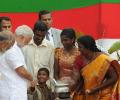
Modi said he was glad that his trip "is one to wipe tears from the eyes of those who suffered".
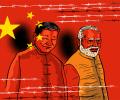
'As China rises and India grows to reclaim their earlier positions on the world stage as two of the largest economies and most important countries, there will indeed be some contention between these two powers.' 'There will also be plenty of space and room for cooperation amongst the two of us.' 'As our economic size increases to match the fact that we are the two most populous nations on earth, it will be all the more important for us to keep the interests of our peoples as well as those of the rest of the world in mind.' 'We shall have to grow together rather than as separate and disparate entities,' points out Ambassador Gautam Bambawale -- who served as India's ambassador to China -- in the 7th annual lecture of the Indian Association of Foreign Affairs Correspondents on March 1, 2019.
 © 2026 Rediff.com - Advertise with us - Disclaimer - Privacy Policy - Sitemap - Feedback - About us - Terms of use - Grievances